Showing posts with label Childhood Illness and Vaccination. Show all posts

Sunday, November 27, 2011

Hand Foot and Mouth Disease

What is hand, foot and mouth disease?

Hand, foot and mouth disease is generally a mild illness caused by the coxsackievirus. It is not a serious illness and has nothing to do with the animal disease called foot and mouth disease. It mainly occurs in children under 10 years of age but can also occur in older children and adults.


What are the symptoms?

  • Coxsackievirus infection may cause no symptoms at all or only very mild symptoms.
  • When symptoms do occur, they include blisters that start as small red dots which later become ulcers. Blisters appear inside the cheeks, gums, and on the sides of the tongue, as well as on the hands and feet. In infants, sometimes blisters can be seen in the nappy area. Blisters usually last for seven to 10 days.
  • Children can sometimes have a low fever, sore throat, tiredness, feel off colour and may be off their food for a day or two.
  • Very rarely, the coxsackieviruses can cause other illnesses that affect the heart, brain, lining of the brain (meningitis), lungs, or eyes. 

How is it spread?

  • Hand, foot and mouth disease is usually spread by person-to-person contact. The virus is spread from the faeces of an infected person to the mouth of the next person by contaminated hands. It is also spread by secretions from the mouth or respiratory system, and by direct contact with the fluid from blisters.
  • It usually takes between three and five days after contact with an infected person before blisters appear. The virus can remain in faeces for several weeks.

Who is at risk?

  • The viruses that cause hand, foot and mouth disease are common and adults including pregnant women are often exposed to them without symptoms. There is no clear evidence of risk to unborn babies from hand, foot and mouth disease. However, infected mothers can pass the infection onto newborn babies who rarely can have severe disease.
  • Outbreaks may occur in child care settings.

How can it be prevented?

  • Good hygiene is the best protection: wash hands with soap and water after going to the toilet, before eating, after wiping noses, and after changing nappies or soiled clothing.
  • Avoid sharing cups, eating utensils, items of personal hygiene (for example: towels, washers and toothbrushes), and clothing (especially shoes and socks).
  • Thoroughly wash any soiled clothing.
  • Ensure the mouth and nose are covered when coughing and sneezing.Wipe the nose and mouth with tissues, dispose of used tissues and then wash your hands.

How is it diagnosed?

The doctor can diagnose hand, foot and mouth disease based on the symptoms. Laboratory tests are not usually necessary.

How is it treated?

Usually no treatment is needed. Paracetamol will relieve fever and discomfort. Do not give children aspirin. If the headache is severe, or if fever persists, consult a doctor.

What is the public health response?

Hand, foot and mouth disease is not notifiable. Children with hand, foot and mouth disease should be excluded from school or childcare facilities until their blisters have dried.
To help prevent spread, parents should report the illness to the director of the childcare centre or school principal.
Source NSW GOVT

Measles - U.K. And Europe

Parents in England and Wales are being urged to have their children vaccinated after a tenfold rise in measles cases in the first four months of the year.

The Health Protection Agency reported 334 cases compared with 33 in the similar period last year.


The outbreak is thought to be linked to an epidemic in France, where 7,000 cases have been reported since January - more than in the whole of 2010.


Worst-hit are London and the South East, with 104 and 102 confirmed cases respectively in the first quarter of this year.
Dr Mary Ramsay, head of immunisation at the Health Protection Agency, warned parents and young adults of the importance of immunisation.

"Although MMR coverage has improved over the last few years, we cannot stress enough that measles is serious and in some cases it can be fatal.

"Measles is a highly infectious and potentially dangerous illness which spreads very easily.


"Whether you stay here in the UK or travel abroad, it is crucial that individuals who may be at risk are fully immunised."

The vaccination rate had been well below 95% for several years, ever since The Lancet published controversial research about the MMR vaccine in 1998.


The study has since been discredited, but confidence in the combined measles, mumps and rubella vaccine has been slow to return.
Source HPA

In Scotland, there have been 12 confirmed cases of measles between January and April, compared with no cases at all for the same time last year.

Since the start of 2011 Northern Ireland has had one confirmed case of measles.


In France, the figure of 7,000 cases so far this year already exceeds the 5,090 recorded in the whole of 2010.

The World Health Organization said France was taking immediate steps to control the outbreaks by vaccinating infants at nine months and offering the vaccine to all unimmunised or under-immunised people over that age.


Other European countries reporting an increase in cases of measles are Belgium, Denmark, Finland, Germany, Norway, Romania, the Russian Federation, Sweden and Switzerland.

Number of laboratory confirmed measles cases in England and Wales

Please see Table On Link:  Number of laboratory confirmed measles cases by age group and regional health authorities (pre-April 2002 definitions) with onset dates between January and August 2011: England and Wales:
 
http://www.hpa.org.u:k/web/HPAweb&HPAwebStandard/HPAweb_C/1223019390211

From Various news sources, April 2011

ACT Measles Cases Confirmed

I am convinced that people who do not vaccinate must never have had any of these awful diseases, or they would never leave their children at risk.

Updated November 23, 2011 20:06:43
Orana students who are not vaccinated against measles are being urged to stay away from school until next week. Australian Capital Territory Health has issued an alert after four cases of measles were confirmed in the territory. Three were detected at the Orana Steiner School in Weston, and the fourth case involves a younger child.

Two children have been admitted to hospital for treatment.
Parents of unvaccinated students at the school have been advised to keep them away from classes until the end of next week.
The ACT President of the Australian Medical Association Iain Dunlop says parents should exercise caution. "If they know of a measles epidemic or know of children who have measles, they should avoid contact if they haven't been vaccinated," Dr Dunlop said. "And even those who have should avoid close contact with children with measles. Once the rash is there the contagion is much less."

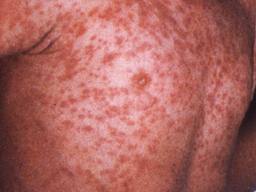
Parents are being warned to look out for measles symptoms, and keep their child at home if they develop a fever, tiredness, runny nose and a cough. A measles rash often appears two to seven days after the initial symptoms.
 
Source ABC News

Measles

Serious and sometimes fatal complications include pneumonia and encephalitis.

Measles -also known as rubeola or morbilli, is an infection of the respiratory system caused by a virus. Measles may have serious complications. In the past, measles infection was very common in childhood.

What are the symptoms?
 
The Virus
  • The first symptoms are fever, tiredness, cough, runny nose, sore red eyes and feeling unwell. A few days later a rash appears. The rash starts on the face, spreads down to the body and lasts for 4-7 days.
  • Up to a third of people with measles have complications. These include ear infections, diarrhoea and pneumonia, and may require hospitalisation. About one in every 1000 people with measles develops encephalitis (swelling of the brain). 

How is it spread?

  • Measles is usually spread when a person breathes in the measles virus that has been coughed or sneezed into the air by an infectious person. Measles is one of the most easily spread of all human infections. Just being in the same room as someone with measles can result in infection.
  • People with measles are usually infectious from just before the symptoms begin until four days after the rash appears. The time from exposure to becoming sick is usually about 10 days. The rash usually appears around 14 days after exposure.

Who can catch measles?

Measles was common before 1966, so most people born before then are immune.
People at risk of measles include:

  • people born during or since 1966 who have never had measles and who have not had two doses of Measles-Mumps-Rubella (MMR) vaccine from the age of 12 months.
  • people with a weak immune system (e.g., people who are receiving chemotherapy or radiotherapy for cancer or people who take high-dose steroid medications) even if they have been fully immunised or have had past measles infection.
  • people who are not immune and who travel overseas.

How is it prevented?

  • The best protection against measles is immunisation with two doses of MMR vaccine. This vaccine provides protection against infection with measles, as well as against mumps and rubella.
  • MMR vaccine should be given to children at age 12 months and a second dose is given at 4 years of age.
  • Anyone born during or after 1966 and who has never had measles infection or MMR vaccination should make sure that they have had two doses of MMR vaccine at least four weeks apart.
  • It is safe to have the vaccine more than twice, so people who are unsure should be vaccinated.
  • People with measles should stay at home until they are no longer infectious (i.e. until 4 days after the rash starts).
  • For people who are not immune and have come into contact with a person with measles, infection can sometimes still be prevented with MMR vaccine if given within 3 days of exposure or with immunoglobulin within 7 days of exposure.

How is it diagnosed?

  • Measles is suspected when a person feels unwell, has a cough, runny nose or sore eyes and a fever followed by a rash.
  • Whenever measles is suspected, a blood test and samples from the nose, throat and urine should be collected to confirm the diagnosis. Confirmation of the diagnosis is important as it allows prompt public health follow-up of other people who are at risk of measles. 

How is it treated?

  • People with measles infection are normally advised to rest, drink plenty of fluids, and take paracetamol to treat the fever. There is no specific treatment.
  • While a person is infectious with measles it is important that he or she remains at home to reduce the possibility of spreading it to other people.

Measles Is A Notifiable Disease

Doctors, hospitals and laboratories schools and childcare centres must notify cases of measles to the local public health unit. Public health unit staff will interview the doctor and patient (or carers) to find out how the infection occurred, identify other people at risk of infection, implement control measures (such as immunisation and restrictions on attending school or work) and provide other advice.

Diphtheria

Remember that diphtheria is a rare disease. Diphtheria is also a reportable disease, and any cases are often publicized in the newspaper or on television. This helps you to know if diphtheria is present in your area.
 

Prevention

Diphtheria is an acute infectious disease. It is a very contagious and potentially life-threatening bacterial infection. Diphtheria was a common cause of death in children up until the 1940s . Because of immunisation of children the disease almost disappeared, but it has once again emerged in some areas of the world with poor immunisation rates. There are fewer than five cases of diphtheria a year in the United States.


The bacteria that cause diphtheria are called Corynebacterium diphtheriae and Corynebacterium ulcerans. Some of these bacteria also produce a toxin.

Children in Seattle receiving the very first vaccination (1940)

Symptoms

  • There may be NO symptoms. 
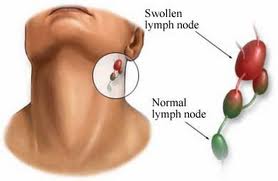
  • Symptoms begin two to five days after exposure to the diphtheria bacteria. The first symptoms are usually a sore throat and a mild fever. A membrane forms over the throat and tonsils that can make it hard to swallow and breathe. The infection can also cause the lymph glands and tissues on both sides of the neck to swell. The bacteria most commonly infects the nose and throat. The throat infection causes a gray to black, tough, fiber-like covering, which can block the airways. 
  • A toxin formed by diphtheria bacteria can cause inflammation of heart muscle and nerves which can be fatal. 
  • Sometimes diphtheria can cause small skin sores that form larger ulcers, commonly on the legs. (generally seen in tropical areas) 
  • People usually take between two and five days to show symptoms after infection. 
  • Bluish colouration of the skin. 
  • Bloody, watery discharge from the nose.
  • Breathing problems :  Difficulty breathing, Rapid breathing, A harsh, high-pitched sound in inhalation or exhalation.
  • Chills, fever, difficulty in swallowing, hoarseness. 
  • A croup-like (barking) cough. 
  • Drooling (suggests difficulty in swallowing).  
    Courtesty of Wrongdiagnosis.com

    How Do You Catch Diphtheria?

    • Diphtheria bacteria can live in the mouth, nose, throat or skin on infected individuals.
    • People with diphtheria are infectious for up to 4 weeks from the onset of symptoms. Some people may become carriers of the bacteria and so be infectious for longer.
    • Corynebacterium ulcerans infection is occasionally associated with consumption of unpasteurised milk or contact with animals.
    • Diphtheria spreads through respiratory droplets (such as those produced by a cough or sneeze) of an infected person or someone who carries the bacteria but has no symptoms. Diphtheria can also be spread by contaminated objects or foods (such as contaminated milk).
    • People can also get diphtheria from close contact with discharges  from an infected person's mouth, nose, throat or skin.


    Those at Risk?

    • Anyone who comes in contact with diphtheria during its infectious phase who has not had diphtheria in the past or has not been fully immunised is at risk.
    Throat membrane

    How Do We Prevent Diphtheria?

    • Diphtheria vaccination protects against the disease. It is part of the standard vaccination schedule and is given as DTP vaccine, which contains combined vaccine against diphtheria, tetanus and pertussis.
    • DTP vaccine should be given at 2,4 and 6 months of age, followed by booster doses at 4 years and at 15 years of age.
    • A high vaccination rate in the community is important to protect the population from resurgence of this disease.

    How Is It Diagnosed?

    • A doctor can suspect diphtheria based on a clinical examination when the membrane is seen in the throat, and by testing throat swabs in a laboratory.
    • Special laboratory tests are needed to detect the toxin and confirm the diagnosis.
    • You may need an ECG (electrocardiogram).
    Skin lesions on throat

    How Is It Treated?

    • Diphtheria infection is treated with antibiotics and antitoxin.
    • If the health care provider thinks you have diphtheria, treatment should be started immediately, even before test results are available.


      Diphtheria antitoxin is given as a shot into a muscle or through an IV (intravenous line). The infection is then treated with antibiotics, such as penicillin and erythromycin.


      People with diphtheria may need to stay in the hospital while the antitoxin is being received. Other treatments may include:

      • Fluids by IV,  Oxygen,  Bed rest,  Heart monitoring, insertion of a breathing tube and correction of airway blockages.
      Anyone who has come into contact with the infected person should receive an immunization or booster shots against diphtheria. Protective immunity lasts only 10 years from the time of vaccination, so it is important for adults to get a booster of tetanus-diphtheria (Td) vaccine every 10 years.
      Those without symptoms who carry diphtheria should be treated with antibiotics.
    Diphtheria may be mild or severe. Some people may not have symptoms. In others, the disease can slowly get worse.
    The death rate is 10%. Recovery from the illness is slow.


    Complications


    The most common complication is inflammation of the heart muscle. The nervous system is also frequently and severely affected, which may result in temporary paralysis.
    The diphtheria toxin can also damage the kidneys.
     

    Diphtheria Is A Notifiable Disease 


    Laboratories, hospitals, school principals and directors of childcare centres are required to notify cases of diphtheria to the local public health unit under the Public Health Act, 1991. Public Health Units investigate cases and their contacts to identify possible sources of infection and prevent further spread. Cases are isolated until they are not infectious. People who have had close or prolonged contact with a case may also be at risk of infection. Some contacts of cases are given antibiotics to stop the infection from developing.


    From :U.S. National Library of Medicine - The World's Largest Medical Library, and Pubmed


    Thursday, November 24, 2011

    DEADLY Diseases are Making a Comeback Because More Parents are Refusing to Vaccinate their Children.

    The following is from The Sunday Telegraph, 22 May, 2011. This is a worldwide problem, lack of immunisation, and I believe it is because many people simply have no concept of the deadliness of these disease.  I will insert some photographs here, with no apology for how awful they are.
     
    DEADLY diseases are making a comeback because more parents are refusing to vaccinate their children.

    Health authorities warn children are at risk of becoming seriously ill and dying from whooping cough, measles, mumps, rubella, diphtheria and tetanus because they are not having their jabs.
    Parents who refuse to immunise believe the vaccines are harmful, but doctors say they are ill-informed and putting the entire community at risk."It is unfair to the child as the child is too young to make an informed decision, and these are very nasty diseases that can kill," infectious diseases expert Dr Jeremy McAnulty said.
     
    "The scientific evidence is overwhelming: immunisation has effectively got rid of many diseases and minimised others, and is one of our greatest public-health achievements," NSW Health's director of Health Protection addedAround one per cent of parents don't immunise their children, but in some pockets of Sydney's north shore and eastern suburbs, the rate of conscientious objectors is eight per cent, and as high as 21 per cent in the Byron Shire.

     
    "If we don't maintain high rates of immunisation, we risk many of these deadly diseases reappearing," he said.
    Chicken Pox Blisters
     
    Multiple cases of whooping cough, measles, mumps, rubella, diphtheria and tetanus have been recorded on the National Notifiable Diseases Surveillance System this year.

    Mumps - he is lucky, one on one side
     
    Tragically, an unimmunised 22-year-old from Brisbane died of diphtheria last month after contracting the disease from a traveller.

    Diptheria - it can form a membrane which closes the whole throat
     
    There have been more than 40 cases of measles reported in NSW so far this year, and almost 5000 of whooping cough - the most of any state.

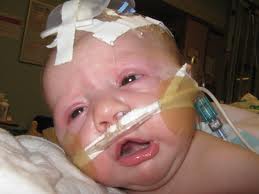
    Baby with Whooping Cough
     
    Seven babies have died from whooping cough in the past two years, including one on the north coast around Easter.
    Measles
     
    Premier Barry O'Farrell, who on Friday had a whooping cough booster shot, said the state government needed to review strategies to combat conscientious objectors, but ultimately it was up to parents. "We shouldn't be contracting to the state what parents need to take responsibility for," Mr O'Farrell said.

    Rubella
     
    "We need to ensure we have the information out there to make sure the myths and misinformation on the internet are combated. It needs to be a constant effort because it does worry me there is a lack of immunisation. "It's been a good seven years since my youngest was four and, like many of us, you make the assumption when you don't have young kids, you're not at risk."
    Baby with Tetanus
     
    Google "vaccines" and one of the first sites to pop up is the Australian Vaccination Network (AVN) that upholds the now-discredited and withdrawn Andrew Wakefield study into an alleged link between autism and the measles, mumps and rubella, or MMR, vaccine.
    Tetanus

    Dr McAnulty said authorities had no control over what was published online, but the science in favour of vaccination was overwhelming. The National Immunisation and Research Surveillance Centre's Professor Robert Booy said: "Immunisation has brought a host of life-threatening infectious diseases under control to the point where experienced GPs can no longer recognise diseases, such as measles, because they rarely see them."

    Meningitis Rash

    Baby with Meningitis
     
    One in 1000 children who contract measles will die, and one in 1000 will develop severe brain swelling. Professor Booy said the vaccine's side-effects were minimal by comparison. "Some will develop a slight fever or a rash, and one in 100,000 will experience some brain swelling, but it's 100 times less risk than the risks of the disease itself."


    Baby with pneumococcal
     
    Many vaccines do contain live viruses and preservatives, such as mercury and formaldehyde, which are known neurotoxins, which some parents are concerned about. But Professor Booy said the risks from the mercury and formaldehyde levels were negligible.Sydney naturopath Fiona Kane, who volunteers with the AVN, said most naturopaths opposed vaccination.

    Little girl with pneumococcal
     
    "I like the idea of vaccines - I just have a lot of doubts about them and what's in them, mercury and aluminium. My problem is we're not allowed to question them." Sandra Rogers, Australian Traditional Medicine Society president, said the society did not take a position on the subject of vaccinations because it was so contentious.

    Baby with gangrene due to HIB
     
    Vaccines for Hib ( Haemophilus influenzae, type b )  and pneumococcal, causes of potentially fatal meningitis, were brought in 10 years ago.

    This is caused  by HIB
     
    "Those diseases used to affect 400-500 children a year, and each kill around 20 children - it just doesn't happen anymore," Professor Booy said.

    Gross swelling caused by HIB

    Monday, October 3, 2011

    Whooping Cough - What Do You Know?

    Whooping cough is caused by the bacterium Bordetella pertussis.  Sometimes other bacteria can cause an illness like whooping cough. Bacteria enter the air passages and damage the lining of the windpipe and the main air passages in the lungs. The inflamed airways produce mucus, which then causes the irritating cough. The bacteria are passed from person to person by the infected mucus during coughing or sneezing.


    Whooping cough (Pertussis)  is highly infectious.  It affects people of all ages, and is most severe in children. It was first recognised after an epidemic in Paris in 1578. It was then called the ‘dog bark’, the ‘chin’ cough or ‘kin’ cough, meaning ‘convulsive’ cough.

    Whooping cough can be a life threatening infection in babies. In babies it can lead to apnoea (pauses in normal breathing), pneumonia, feeding problems and weight loss, seizures, brain damage and, in some cases, death. Older children and adults can get whooping cough too and pass it on to babies.


    The disease causes sudden attacks of an irritating cough that often, but not always, end in a high-pitched whooping sound as the child takes a breath. Although immunisation has reduced its severity, it is still a common infection. Regular epidemics occur every in Australia 3 to 4 years. It is particularly severe in children less than one year of age. You can hear the sound of the whooping on the following .wav file.  It is quite distinctive:

    Small Child With Whooping Cough (wav file) 

    If your child contracts whooping cough and has not been vaccinated, he is more likely to develop pneumonia. A severe case of whooping cough or pneumonia could result in brain damage or death. If your child has never had the disease and has not been vaccinated against it, he is likely to get whooping cough if he comes into contact with the bacteria. Whooping cough is also dangerous in elderly people, but does tend to be less severe in adolescents and adults.

    Whooping cough is spread when an infectious person coughs bacteria into the air which can be inhaled by people nearby. If they are not treated early, people with whooping cough are infectious in the first three weeks of their illness.
    Whooping cough spreads easily through families, childcare centres and at school.


    The symptoms of whooping cough commonly develop about 7 to 10 days after exposure to the bacteria, but can occur any time from a few days to a few weeks. Whooping cough symptoms can be divided into 3 stages. The cough commonly persists for up to 3 months.


    • Whooping cough usually begins like a cold with a blocked or runny nose, tiredness, mild fever and a cough.
    • The cough gets worse and severe bouts of uncontrollable coughing can develop. Coughing bouts can be followed by vomiting, choking or taking a big gasping breath which causes a "whooping" sound. The cough can last for many weeks and can be worse at night.
    • Some newborns may not cough at all but they can stop breathing and turn blue. Some babies have difficulties feeding and can choke or gag.
    • Older children and adults may just have a cough that lasts for many weeks. They may not have the whoop.
    Anyone can get whooping cough. People living in the same household as someone with whooping cough are especially at risk.  Immunisation reduces the risk of infection but immunity fades over time. You can still get whooping cough even if you've been immunised.


    Whooping cough vaccines provide good protection from infection but immunity fades which means that boosters are needed.


    Immunisation 
    Babies need to be immunised at 2 months, 4 months and 6 months (Australia). The first dose can be given as early as 6 weeks of age.
    Getting your baby vaccinated on time gives them some protection when they are most at risk of severe illness.
    If your baby's vaccines are overdue, see your GP now to catch up.
    A whooping cough booster is needed at 4 years of age.
    (Australia)
    In the UK, children are vaccinated against whooping cough at two, three and four months of age, and again before starting school at about three years and four months of age.)

    A booster for adults is recommended for:
    Both parents when they are planning a pregnancy, or just after the baby is born
    Other adult household members, grandparents and carers of infants under 12 months of age.
    Adults working with young children, especially health care and child care workers. For a limited time, a free booster is available from GPs for new parents grandparents and carers of babies under 12 months.


    If you are a close contact of someone with whooping cough:
    If you have been exposed to someone with whooping cough early in their illness while they are infectious, watch out for symptoms and see your doctor if you get a new cough.

    Some babies and some pregnant women need antibiotics to prevent whooping cough infection if they have had significant contact with an infectious person.


    How is whooping cough diagnosed?
    Your doctor may ask about your symptoms and whether there you've had any contact with whooping cough. If your doctor thinks you have whooping cough, a swab from the back of the nose or throat can confirm the diagnosis. (I think it is a great idea to video the cough to show the doctor.)

    How is it treated?
    Some babies may need treatment in hospital or in intensive care.
    Antibiotics are used to treat whooping cough in the early stages and can help prevent spreading whooping cough to others. People who are not treated early with the right antibiotics can spread the infection in the first 3 weeks of their illness. After 5 days of antibiotics, you are normally no longer infectious.


    The cough often continues for many weeks, despite antibiotics.
    Infectious children are restricted from going to pre-school and school. Un-immunised contacts may be excluded from child care unless they take the special antibiotics.


    Wednesday, September 28, 2011

    To Vaccinate or Not to Vaccinate?

    An article in the Washington Post this week said that in 2010, more than 11,000 kindergarten children in California had not received at least one vaccine, and that parents are using a "personal belief exemption"  to avoid immunising their child. To cap it off, this is the highest rate "declined" vaccines since approx. 1978.  The frightful thing this is that last year in California there were more than 9,100 people who contracted whooping cough, and 10 babies died from the disease.  Health officials there believe the opting out is due to misinformation - I would say a lot of this is on the internet also.   This ridiculous scare mongering has been around since before I had my daughter, who is 34.  There is no foundation, no basis for the scare tactics by a certain segment of the public, and the media in general.    The articles states that John Talarico, chief of immunisation branch of the California Department of Public Health, said:

    “We really think a lot of it is due to honest, valid concern that parents do the best thing for their child coupled with misinformation that gets out through various forms of communication”

    A HUGE RELIEF TO PARENTS - SALK VACCINE 

    In the past few days I have read, with growing horror, of an outbreak of polio virus type 1 in China.  Just this month 10 children have been confirmed to have the virus.  That is 10 children too many! The World Health Organisation has isolated the virus taken from these children and has confirmed that the strains were genetically linked to the virus which is currently circulating in Pakistan.  WHO still does not know if the virus was spread from China to Pakistan or vice versa.  Pakistan reported 84 cases of polio this year - and this is an increase of 48 on last year.  There are only four countries in the world which are still reporting cases of polio.   These are Pakistan, Nigeria, India and Afghanistan.

    1916 - PEOPLE IN IRON LUNGS DURING POLIO OUTBREAK (USA)

    The gravest concern is the high risk of the virus spreading internationally, particularly where there are large population movements around the Hajj pilgrimage to Mecca in Saudi Arabia.

    This outbreak and the potential for polio spreading around the world in a short time should be of huge concern to everyone.  Countries such as USA, UK, and Australia have business connections in both Pakistan and China, and thus there is travel to and from these countries.  America has military personnel in Pakistan.   China is a popular holiday destination from Australia.  People travel to India, Pakistan, China and return home - are they carrying the virus with them?   There is a strong, if misguided movement AGAINST vaccinating children, both here in Australia and in America.  Obviously children who are not vaccinated are totally unprotected.   Polio has no cure.

    PATIENT IN IRON LUNG.  ONE AUSTRALIAN WOMAN SPENT 60 YEARS IN AN IRON LUNG BECAUSE OF POLIO. THE IRON LUNG ALLOWS PATIENTS TO BREATHE

    The World Health Channel gives the following information

    Poliomyelitis (polio) is a serious disease, caused by infection with one of the three types of poliovirus. The virus is spread through contact with food, water or hands that are contaminated with the faeces (poo) or throat secretions of an infected person.Symptoms vary from mild, flu-like symptoms to life-threatening paralysis. In one to two per cent of cases, polio affects the nerves, resulting in paralysis of the arms, legs or the diaphragm (which controls breathing). Between two and five per cent of people who develop paralytic polio will die. Half of those who survive will have permanent paralysis.Polio can be prevented with immunisation. All children and adults should receive the vaccine.

    CHILDREN AFFECTED BY POLIO


    Symptoms of polio

    Polio symptoms generally appear between three and 21 days after infection. However, many people infected with poliovirus have no symptoms and may not even know they are affected. In mild polio cases, symptoms include:

        Fever
        Tiredness and weakness (malaise)
        Headache
        Nausea and vomiting
        Muscle stiffness.

    If the virus spreads to the nervous system, major illness such as meningitis (brain infection) and paralysis can occur. The onset of paralysis is generally quite rapid – usually within three to four days.

    Symptoms include:

        Severe muscle pain
        Stiffness of the neck and back, with or without paralysis
        Swallowing and breathing problems
        Long-term disability, due to paralysis of the muscles
        Death in severe cases, when breathing and swallowing muscles are
        paralysed.

    OUR MODERN WORLD.  THIS LITTLE GIRL HAD POLIO

    The poliovirus enters the body through the ‘orofaecal route’. That means it is spread when food, water or hands that are contaminated with the faeces (poo) or oropharyngeal (throat) secretions of an infected person are put into the mouth of another person. A person may develop symptoms within three to 21 days of coming into contact with the virus. They will be most infectious seven to 10 days before and after the start of symptoms. However, they remain infectious as long as the virus continues to be excreted in their faeces (poo). This may continue for several weeks. Typically, the virus remains in the throat for one to two weeks.
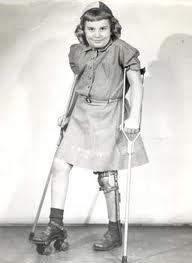


    Polio is a terrifying, devastating disease.  Between 1930 and 1960 there were 40,000 cases of paralytic poliomyelitis recorded in Australia. In real numbers those infected with  polio  could be up to 100 times greater. This is because only 1 in100 cases of polio causes complete paralysis, requiring hospitalisation and mandatory reporting.  A large percentage of the ‘non-paralytic’ and non-reported polio infections would still have caused considerable damage to the motor neurons.

    It is now known that polio also has late effects, which can occur up to 30 years after the infection.  It is estimated that up to 4 MILLION people were infected in Australia between 1930 and 1988.  Polio can cause total paralysis in a few hours.  It is not confined to infants, but can affect all ages.  People can become carriers, showing no symptoms but infecting others.  Polio can infect thousands before the first case of paralysis is seen - the WHO considers that one confirmed case of paralysis is evidence of an epidemic.
    POLIO PATIENTS - NEW ZEALAND

    I cannot urge you strongly enough to ensure your children are vaccinated, and to have a booster yourself.  Because the virus lives in the intestines and is passed in faeces, when your child has been vaccinated you must take extreme care to wash your hands thoroughly before and after changing a nappy, as it is possible for the virus to be passed to you.  I am sure that the nurse or doctor administering the vaccine will advise everyone of the proper precautions to take after vaccination.

    POLIO VICTIM - U.K.

    When I was in high school there was a boy my age who had a cumbersome brace on his leg, which he literally had to drag around with him.  He had contracted polio when he was small.   The effects of the vaccine last for a day or so (if the child has any reaction!) but the effects of the disease itself last a lifetime, IF the child is lucky enough to survive.